Entry · Ref O6PMM4JC
Gutter Repair for Homes with Steep Rooflines
- Posted
- 2026-10-19
- Last amended
- 2026-10-19
- Account
- @stephennfal276
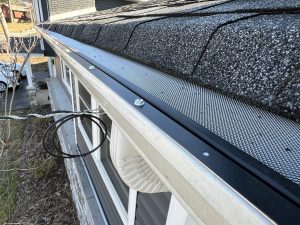


Steep roofs have a certain authority. They shed snow well, handle heavy rain with less standing water, and often give a house its strongest architectural character. They also turn ordinary gutter work into a more exacting job. On a low-slope ranch, a minor gutter issue might show up as a drip over the driveway and little more. On a steep roofline, that same small failure can send a concentrated sheet of water past the gutter, erode soil in a single season, stain siding, loosen fascia, and in colder climates create dangerous ice near entries and walkways.
That difference in water behavior is what makes gutter repair on steep-roof homes its own category of work. Gravity accelerates runoff. Valleys discharge hard and fast. Upper roofs often dump into lower roof sections, multiplying the flow rate in a way homeowners do not always expect. When repairs are done casually, or with the same assumptions used on a shallow roof, the system may look neat for a few weeks and still fail in the next serious storm.
I have seen that pattern more than once. A homeowner notices a corner leak, someone re-seals the joint, and everybody thinks the problem is fixed. Then a hard rain arrives, water overshoots the front gutter because the real issue was capacity and water speed, not just a leaky seam. The repair was not wrong, exactly. It just addressed the symptom instead of the forces at work.
Why steep rooflines punish weak gutter systems
A gutter does two basic jobs. It catches roof runoff, then moves it to downspouts before the water can overflow or back up. On a steep roof, both jobs get harder.
The first challenge is https://knoxozbv601.theglensecret.com/why-timely-gutter-repair-can-save-you-thousands capture. Water coming off a steep pitch does not ease into the gutter. It has momentum. If the gutter is mounted a little too low or too far from the roof edge, runoff can shoot right over it during heavy rain. This is common on homes with dramatic front gables, long rafter tails, or older half-round systems that were installed more for appearance than capacity.
The second challenge is transport. Even if the gutter catches the water, the volume can exceed what that section and its downspouts can move. A roof area that looks modest from the ground may feed an outsized amount of runoff into one eave. Add a valley or an upper roof draining onto a lower one, and you can overwhelm a standard 5-inch system quickly.
There is also the matter of debris. Steeper roofs often shed twigs, granules, and leaves more aggressively. Material slides into the gutters faster, packs down near outlets, and can turn a manageable maintenance issue into a blockage after one windy storm.
None of that means steep-roof homes are doomed to chronic gutter problems. It means repairs must be based on water behavior, not just visible damage.
The repair call usually starts with clues on the ground
Many homeowners first notice trouble where the water lands, not where the defect begins. Mulch washed out of beds, muddy splash marks on brick, peeling paint on trim below the eaves, and trenches forming along the foundation are common early signs. In colder regions, a row of thick icicles or a recurring patch of ice near the front stoop can point to poor drainage and freeze-thaw stress in the gutter line.
One of the more telling clues is pattern. If overflow happens only at one inside corner or only during hard storms, the issue is often hydraulic, meaning capacity, slope, or outlet placement. If the leak appears after every rain, even light rain, it may be a failed seam, pinhole corrosion, or a section pulling away from the fascia. If you hear water hammering inside a downspout and then spilling over the edge upstream, there is a good chance the downspout is partially blocked or undersized for the roof area feeding it.
On steep roofs, I pay close attention to valleys and roof transitions. Those are the places where a repair estimate can go badly off track if the contractor only walks the perimeter and does not think through how the roof drains as a system.
What actually fails on steep-roof gutter systems
The list of possible defects is familiar, but the causes and severity often differ from those on simpler homes.
Loose hangers are common because the force of moving water, added to the weight of wet debris or winter ice, puts more strain on the fasteners. A gutter can remain attached and still sag enough to create standing water, which then increases the load and starts a cascade of deterioration.
Fascia damage often hides behind the gutter. Overflow from a misaligned drip edge or a clogged section can wet the wood for months before anyone notices. By the time the gutter is removed for repair, the wood may be soft or split, and refastening into compromised fascia will not hold.
Leaking seams and end caps show up on sectional systems, especially older aluminum installations. Repeated expansion, contraction, and water impact break down sealants. On steep-roof homes, those joints are frequently exposed to greater flow velocity, so small gaps turn into obvious leaks.
Another recurring issue is apron and drip edge incompatibility. If the lower edge of the roofing does not direct water cleanly into the gutter, runoff can curl behind it. Homeowners often assume the gutter itself is defective when the roof edge detail is the real problem.
Then there is overtopping, which is not a broken gutter at all. It is a design mismatch. The gutter may be intact, but it is too small, mounted wrong, or served by too few downspouts. Repair in that case means modification, not patching.
The importance of diagnosing before repairing
Good gutter repair starts with measurements and observation, not sealant. On steep-roof homes, that means looking at roof pitch, run length, valley locations, lower-roof catchment areas, and current downspout placement. If a contractor gives a fix without considering those, the work may be tidy and still ineffective.
A proper diagnosis asks a few practical questions. Where does the water come from during a peak rain event? Does one short section of gutter carry runoff from multiple roof planes? Is the overflow happening at the midpoint, which can suggest poor pitch or insufficient outlets, or near the end, which can indicate a blocked downspout or outlet bottleneck? Are shingles extending too far past the roof edge, causing water to overshoot? Is the fascia sound enough to hold a re-secured system under load?
It is not glamorous work, but this is where experienced judgment shows. The same visible symptom, water spilling at the corner, might call for a seam repair on one house, a second downspout on another, and a larger gutter profile on a third.
Repairs that often work, and when they do not
For many steep-roof homes, the most effective repair is a combination of smaller corrections rather than one dramatic replacement. Re-pitching a gutter section, replacing failed hangers with stronger hidden hangers, resealing corners, and clearing outlet restrictions can restore performance if the original system was reasonably well sized.
When overshoot is the issue, repositioning the gutter closer to the drip line or slightly higher relative to the roof edge can help. There is a limit, though. Set it too high and heavy runoff can run over the back edge or saturate the fascia. The right position depends on the roof edge detail and the way water leaves that specific roof.
Splash guards are often useful at valley discharge points. They are simple, but on steep roofs they can be the difference between controlled flow and chronic corner overflow. They are not a cure-all. If the valley is dumping more water than the gutter can carry, the guard merely redirects the problem. In those cases, upsizing the gutter or adding capacity downstream is more honest and more durable.
Downspouts deserve more attention than they usually get. I have seen many homes where the gutter itself was adequate, but one undersized or poorly placed downspout was throttling the whole run. Increasing from a smaller rectangular downspout to a larger one, or adding a second outlet to split the flow, can dramatically improve performance during cloudbursts.
There are also times when patching is false economy. If seams are failing in multiple places, the metal is thin, and the fascia behind it needs repair, piecemeal work can cost almost as much as replacing the affected sections without delivering the same service life.
Material choices matter more on demanding rooflines
Not every gutter material responds the same way to steep-roof conditions. Aluminum remains common because it is affordable, does not rust, and works well when properly sized and installed. For many homes, it is the practical middle ground. Thicker aluminum stock generally holds shape better under load than lighter material, which can be important where snow, ice, and fast runoff all meet.
Steel is tougher in impact situations, but it requires careful coating and maintenance to resist corrosion. Copper performs very well and ages beautifully, but it comes at a premium and still needs skilled installation to justify the cost.
Profile matters too. A standard K-style gutter handles a respectable volume, but steep-roof homes with concentrated runoff may benefit from 6-inch rather than 5-inch sizing, particularly where valleys converge or upper roofs feed lower sections. Half-round gutters can work, especially on historic homes, but they usually need thoughtful sizing and support because their effective capacity and mounting geometry differ from K-style systems.
This is one of those places where homeowners can save money by spending selectively. You do not always need a whole-house upgrade. Sometimes only the high-demand sections need larger gutters or additional outlets.
Fascia, soffit, and roof edge details can make or break the repair
A gutter is only as reliable as the structure holding it. On steep-roof homes, that truth becomes obvious fast. If water has been running behind the gutter, the fascia may be rotted in isolated pockets while still looking sound from below. Fasteners driven into soft wood loosen, and the gutter begins to pull away under load.
Any credible repair plan should include inspection of the mounting surface. That may mean removing a section to check the wood, replacing damaged fascia, and reinstalling with the correct fasteners and spacing. It is not the most visible part of the job, but it is often the part that determines whether the repair lasts three years or fifteen.
Drip edge is another overlooked factor. If roofing underlayment or edge metal directs water behind the gutter, no amount of seam sealing will solve the staining and wood decay. Correcting the roof edge transition may be a roofer’s task rather than a gutter technician’s, or it may require coordination between the two. On steep houses, trades overlap more often than people think.
Safety is not a side note on these jobs
Steep roofs change the risk profile of even simple gutter work. The repair itself may be done from ladders, scaffolding, or lifts rather than from the roof surface, but access is still more complicated. High eaves, sloped terrain, landscaping, porches, and dormers all affect setup. That has a direct effect on cost and on the quality of the work.
I mention this because homeowners are sometimes surprised when a small repair estimate on a steep-roof home costs more than a larger repair on a one-story house. The difference is not arbitrary. It reflects labor, access equipment, setup time, and the need to work carefully around architectural obstacles.
A contractor who rushes access planning often rushes the repair too. On these homes, neat alignment, correct hanger spacing, secure fastening into sound wood, and proper downspout support all depend on working from a stable position, not balancing on a ladder and hoping the sealant holds.
When Gutter Repair turns into redesign
There is a point where the most responsible recommendation is not repair, but reconfiguration. That usually happens when the original gutter layout was underbuilt for the roof geometry.
A few scenarios tend to justify more than patching:
- repeated overflow at valleys despite cleaning and resealing
- long runs with too few downspouts
- standard-size gutters serving large upper and lower roof areas together
- recurring fascia damage caused by backflow or overshoot
- chronic winter ice linked to poor drainage and standing water
In cases like these, a redesign may involve larger gutters, more outlets, rerouted downspouts, or splitting one drainage path into two. It can also include targeted roof-edge adjustments. Homeowners sometimes resist this because the old system “worked for years.” Often it only appeared to work because weather patterns were milder, landscaping covered the erosion, or the damage behind the gutter had not become visible yet.
Maintenance habits that prevent repeat repairs
Steep-roof homes need a little more discipline when it comes to gutter care. Not constant attention, but regular, timely attention. The system is less forgiving once debris begins to accumulate or a minor alignment issue develops.
The most useful maintenance is seasonal inspection tied to local conditions. In wooded areas, a late-fall cleaning may not be enough if spring seed drop or summer storms add fresh debris. In snow country, checking for loose hangers and standing water before freeze season matters as much as clearing leaves.
Gutter guards can help in some settings, but they are not universal solutions. Fine mesh products often perform better with small debris, while surface-tension styles can struggle where roof runoff is especially forceful. On a steep roof, the wrong guard can contribute to overshoot or make maintenance harder by hiding the beginning of a blockage. Guards are best chosen with the roof pitch and surrounding trees in mind, not as an impulse add-on.
Here is a short maintenance rhythm that works well for many steep-roof homes:
- inspect gutters and downspouts at least twice a year, and after major storms
- watch valley outlets and upper-to-lower roof transitions for early overflow
- check for hanger movement, joint seepage, and stains on fascia or siding
- keep discharge points clear so downspouts do not back up under load
- address small slope or fastening issues before winter adds weight and stress
Those are simple habits, but they prevent many of the repair calls that come after water has already damaged trim, masonry, or foundation beds.
What to ask before hiring for a steep-roof repair
The quality gap between an average gutter repair and a good one widens on steep-roof homes. A contractor does not need to be flashy, but they should be able to explain how your roof drains and why their fix matches that drainage pattern.
Ask how they plan to evaluate capacity, not just leaks. Ask whether they will inspect fascia condition before refastening. Ask whether problem areas would benefit from larger sections, splash guards, or more downspouts. If the house has a history of ice, ask how standing water and pitch will be addressed. If they talk only about caulk and cleaning, keep asking questions.
It is also worth paying attention to the proposed scope. A careful contractor will distinguish between repairable sections and areas where replacement is more efficient. They should be comfortable saying, “This corner can be repaired, but this whole run is undersized for the valley feeding it.” That kind of specificity usually signals actual field experience.
The hidden costs of waiting
Homeowners often postpone gutter repair because the issue seems cosmetic. A drip at the eave does not feel urgent until the mulch trench deepens, the basement wall stays damp, or paint begins peeling around a bedroom window. On steep-roof homes, deterioration tends to accelerate once it starts because the water volume is concentrated and repetitive.
The cost difference can be striking. Resealing a leaking corner and replacing a few hangers is one level of expense. Replacing rotted fascia, repairing soffit, repainting exterior trim, and correcting foundation drainage after several seasons of overflow is another. If winter ice enters the story, damaged gutters can pull free entirely, sometimes taking trim and roof edge materials with them.
That is why timely Gutter Repair matters so much on these houses. It is not merely about keeping water off your head at the front door. It is about preserving the chain of materials that begins at the shingles and ends at the soil around the foundation.
A steep roof can work beautifully with the right gutter system
Some of the best-performing homes I have seen have steep rooflines. Their gutters are not necessarily fancy, but they are proportioned correctly, fastened well, pitched accurately, and maintained with some consistency. Valleys are respected. Downspouts are sized for real weather, not ideal weather. The fascia is sound. The water has a clear route from roof to ground.
That is the standard worth aiming for. When repairs are guided by how the roof actually sheds water, steep pitch stops being a handicap and becomes just another design condition to handle properly. The house stays drier, trim lasts longer, walkways stay safer, and the exterior looks cared for in the way that matters most, by performing well when the weather is at its worst.
Just Gutters LLC
262 Main St
Hackettstown, NJ 07840, United States
Phone: +1 201-331-9454
FAQ About Gutter Repair
Is it cheaper to repair or replace gutters?
Repair can cost less when damage is limited and the remaining system is sound. Replacement may offer better value when leaks, corrosion, or repeated failures affect several sections. An inspection and written estimate can help compare the options.
Can damaged gutters be repaired?
Many localized problems, including leaking joints, loose brackets, sagging sections, and damaged downspout connections, can be repaired. The best approach depends on the material, extent of damage, and condition of the mounting surface.
Can I repair gutters myself?
Simple ground-level checks may help identify a problem, but roof-edge work carries fall risks and may require specialized tools. Professional assessment is advisable for high gutters, loose sections, hidden wood damage, or uncertain drainage problems.